Why Risk Assessment Matters Now
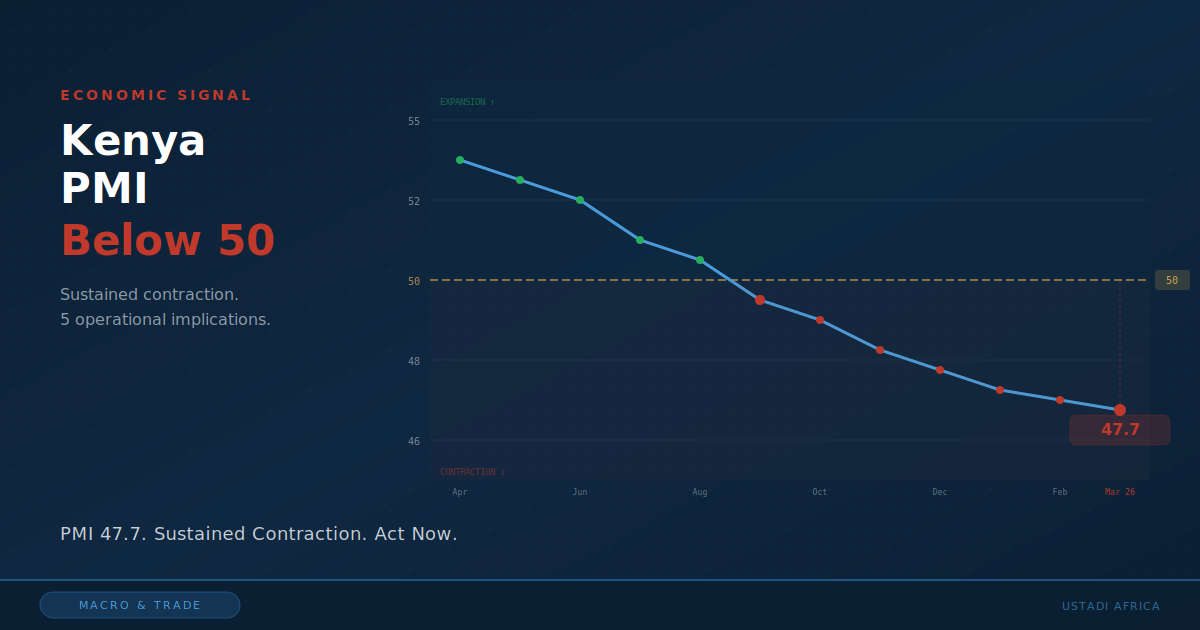
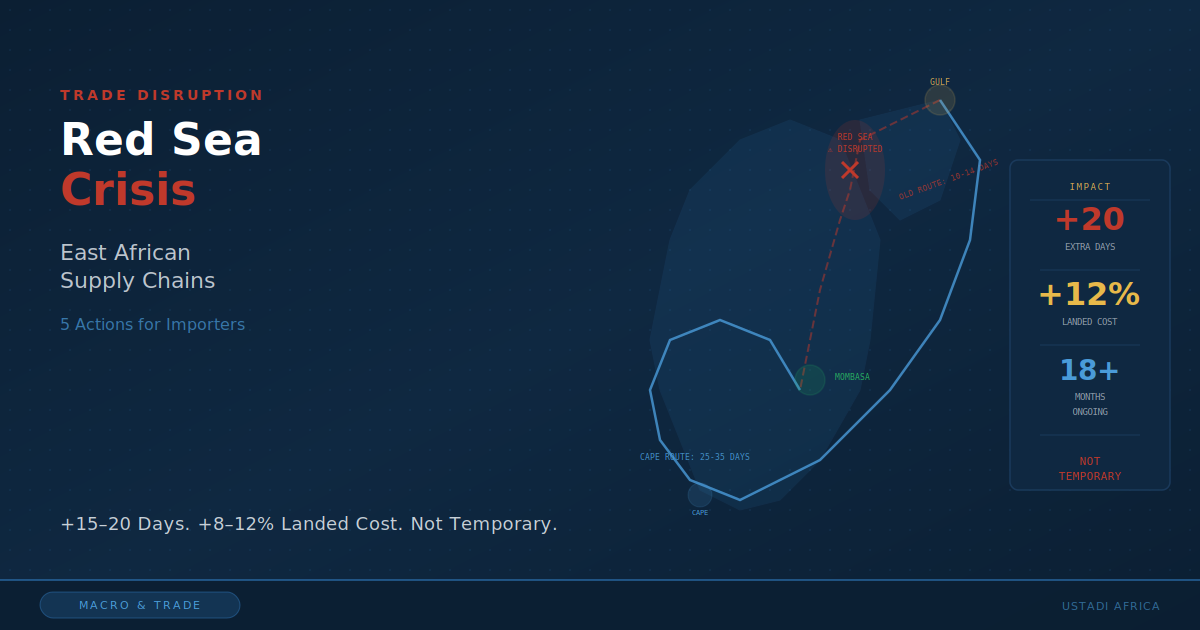
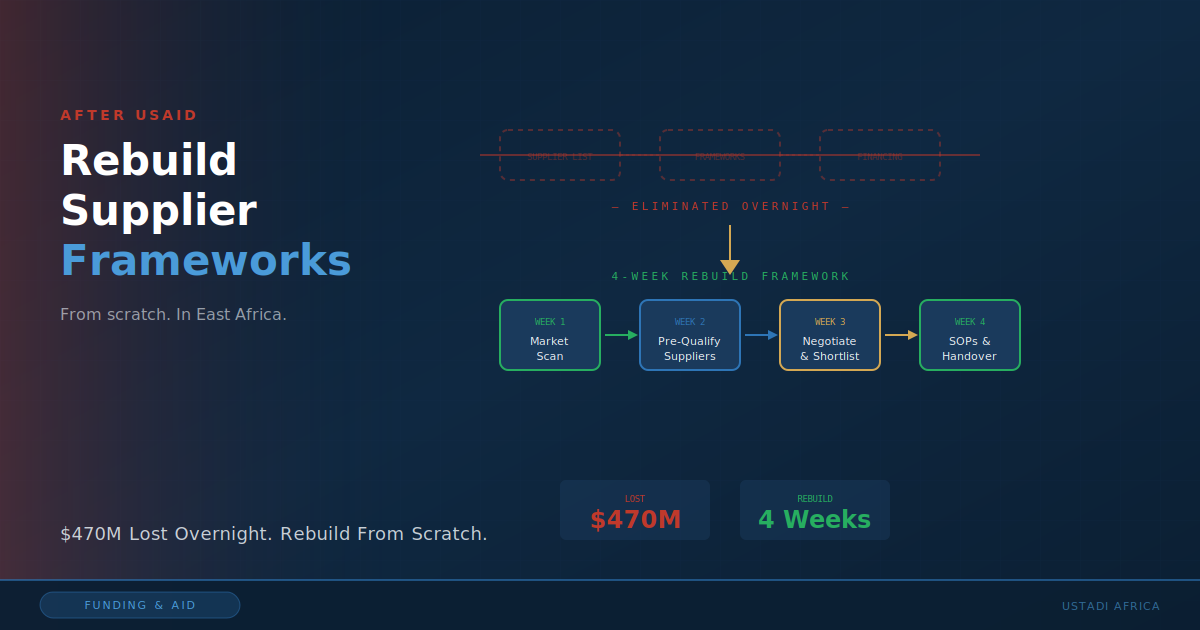
East African supply chains in 2026 face compounding pressures that make risk assessment not optional but operationally critical. Red Sea shipping disruptions have extended lead times by 15-20 days. USAID restructuring has collapsed established supplier frameworks. Kenya's PMI has been below 50 for consecutive months, indicating sustained business contraction. Currency volatility affects procurement costs across the region. Each of these individually would warrant a risk review. Together, they create an environment where unassessed risk can cause operational shutdown.
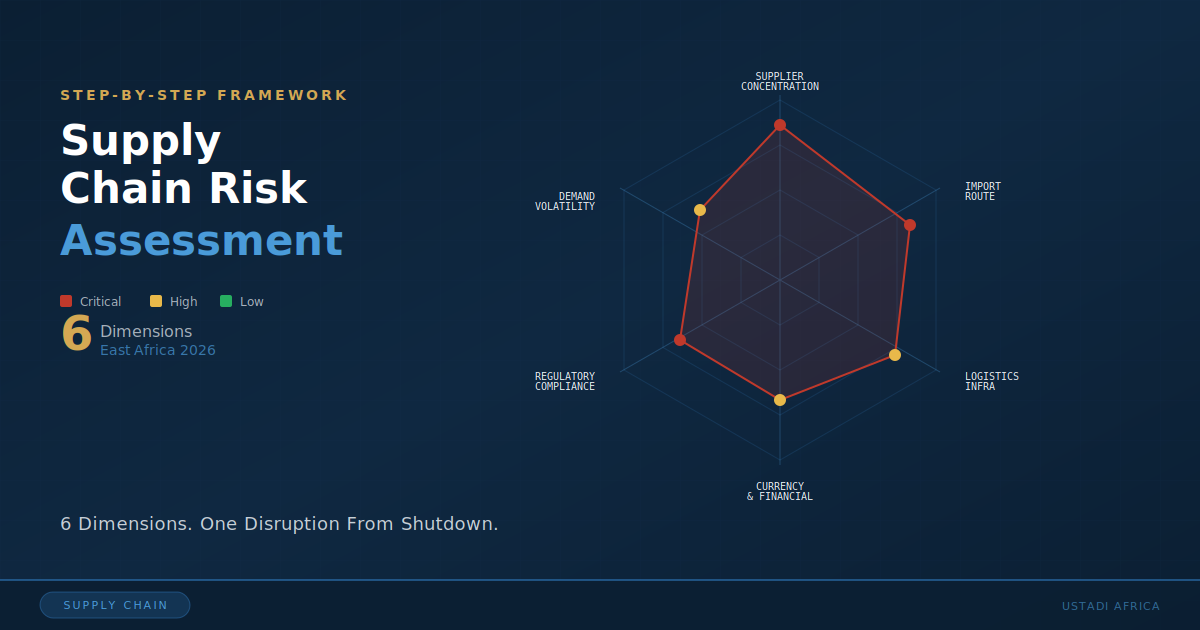
The 6-Dimension Risk Framework
Dimension 1: Supplier Concentration Risk
For each commodity category, answer: how many qualified suppliers do you have? If the answer is one, your concentration risk is critical. Map every commodity against its supplier base. Score: 1 supplier = critical (red), 2 suppliers = high (orange), 3+ suppliers = moderate (yellow), 5+ with no single supplier above 40% = low (green). The target is no single supplier accounting for more than 30% of any critical commodity category.
Dimension 2: Import Route Exposure
Map every imported commodity to its trade route. Identify which routes transit the Red Sea, which depend on specific ports, and which have infrastructure bottlenecks. Score each route on current reliability, alternative route availability, and cost sensitivity to rerouting.
Dimension 3: Logistics Infrastructure
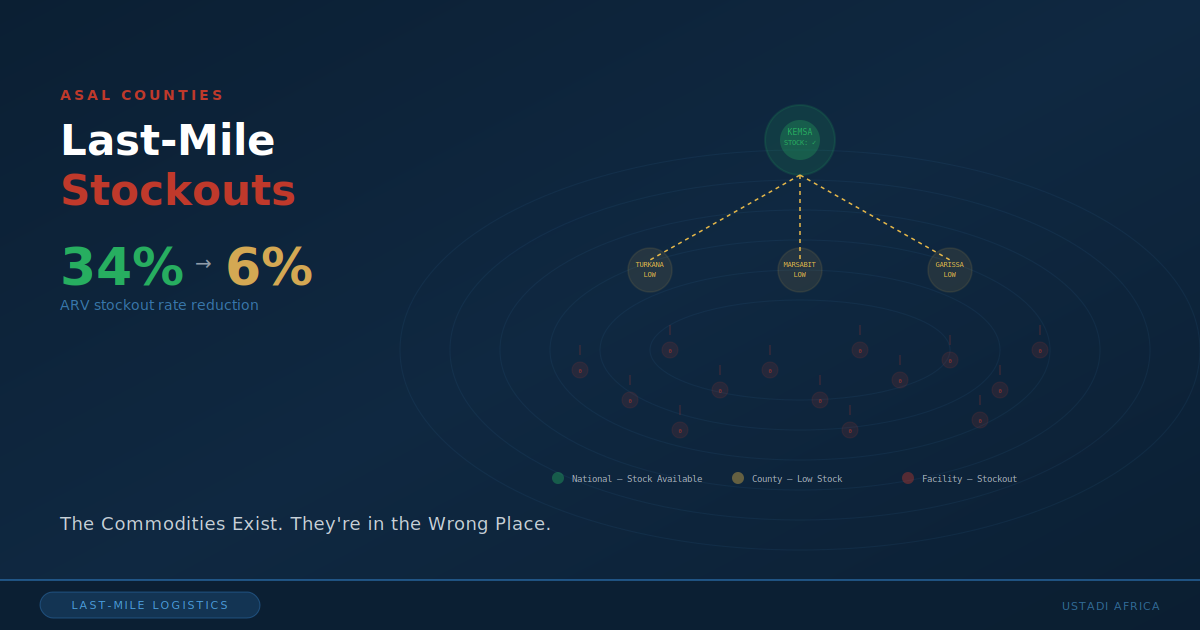
Assess the physical infrastructure your supply chain depends on. Road quality, port capacity, warehousing adequacy, and cold chain reliability. In ASAL regions, assess seasonal access constraints. Score each logistics node on current condition, redundancy, and vulnerability to weather, security, or congestion events.
Dimension 4: Currency and Financial Risk
For import-dependent supply chains, currency volatility directly affects procurement costs. Map your exposure by currency. Assess hedging options, payment term flexibility, and the financial impact of a 10% adverse currency movement on your procurement budget.
Dimension 5: Regulatory and Compliance Risk
Regulatory changes can disrupt supply chains overnight. Import restrictions, tax changes, certification requirements, and customs procedure modifications all create risk. Track pending regulatory changes in your operating countries and assess their potential impact on your supply chain.
Dimension 6: Demand Volatility
How predictable is your demand? Seasonal variations, campaign schedules, programme expansions, and emergency response needs all create demand volatility. Supply chains designed for stable demand fail when demand spikes. Assess your demand predictability and design buffer capacity accordingly.
Building the Risk Register
For each risk identified across the 6 dimensions, document: the risk description, the likelihood (1-5), the impact if it materialises (1-5), the risk score (likelihood × impact), the current mitigation in place, and the additional mitigation needed. Prioritise risks by score and address the highest-scoring risks first.
From Assessment to Action
A risk assessment that sits in a drawer is worthless. The output must be: (1) a qualified backup supplier list for every critical commodity, (2) an alternative route contingency for every import corridor, (3) a demand buffer for every volatile commodity, and (4) an early warning protocol that triggers before disruptions become crises.
Need a structured risk assessment for your supply chain? Ustadi Africa conducts comprehensive assessments across all 6 dimensions. Contact Us