Search
Supply Chain Advisory — Africa

African Supply Chains Break in Specific Ways. We Fix Each One.

Procurement files failing audits. e-GP uploads blocking budget absorption. Suppliers collapsing mid-contract. We diagnose the exact failure and resolve it — for NGOs, government, corporates, and DFIs across East Africa.

Audit Remediation e-GP Recovery Supplier Vetting Last-Mile Redesign Absorption Acceleration Data & Systems
Consulting · Research · Training — In Practice
01 / 07
“Our e-GP procurement plan won’t upload to IFMIS. Budget absorption is at 12% with the fiscal year closing.”
Hands-on training inside the live e-GP portal. Plans uploaded, POs processing, absorption unblocked.
Deliverable → e-GP system recovery + staff certification
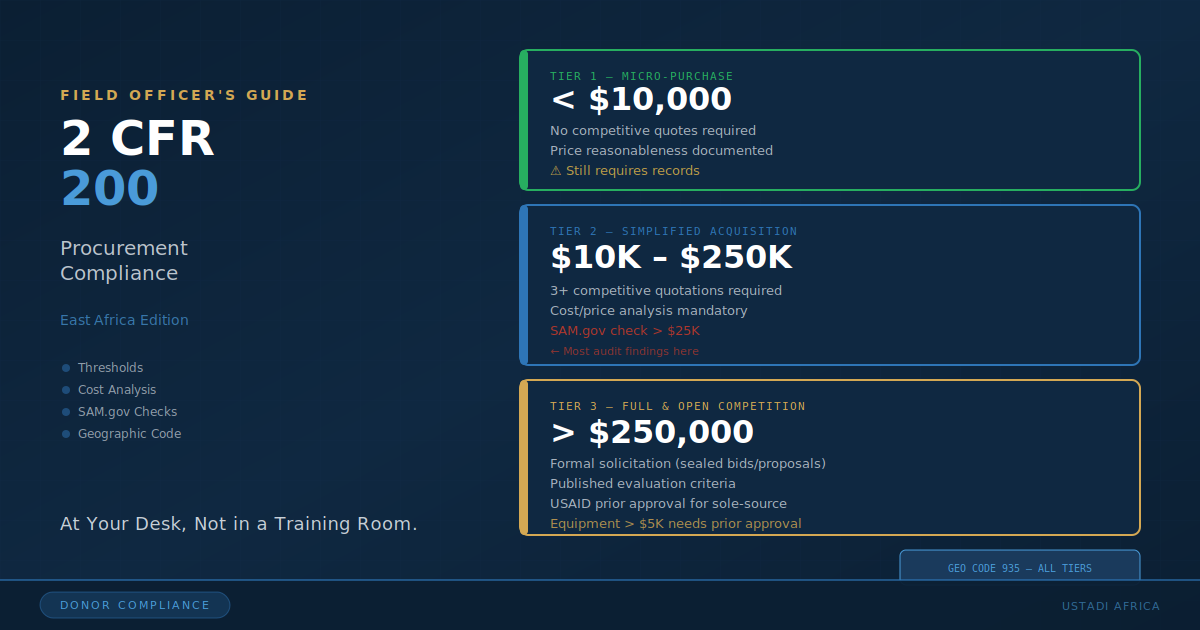
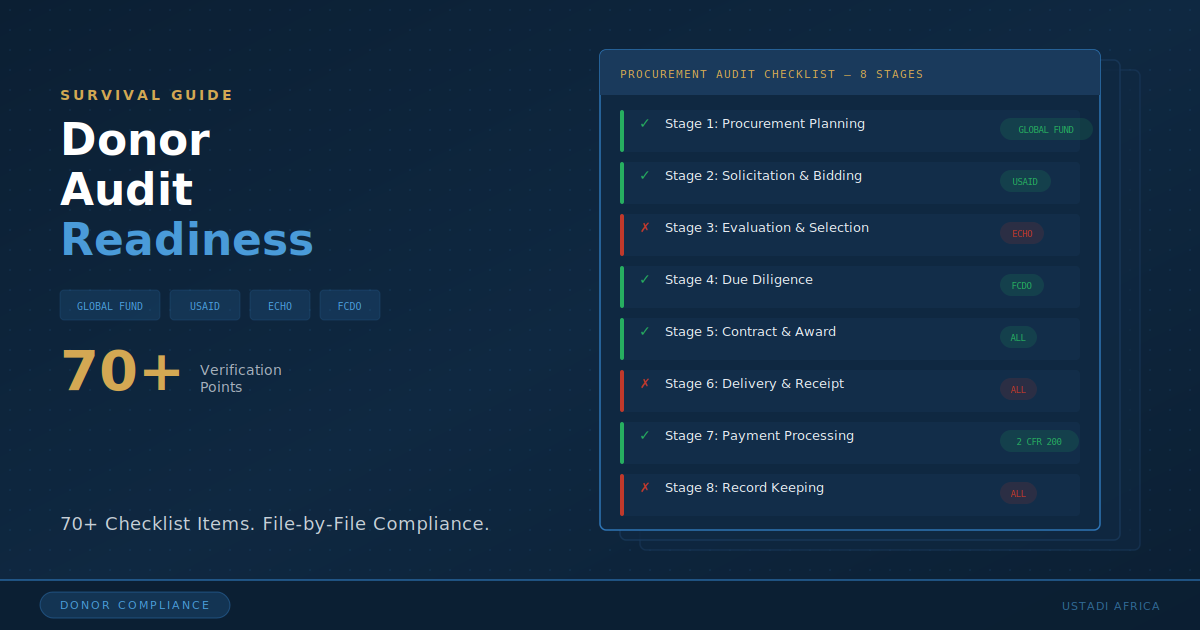
“The Global Fund auditor found missing traceability on 40% of our procurement files. 2 CFR 200 noncompliance.”
File-by-file gap analysis against donor-specific compliance requirements. Closure plan for every finding.
Deliverable → compliance remediation plan + audit-ready files
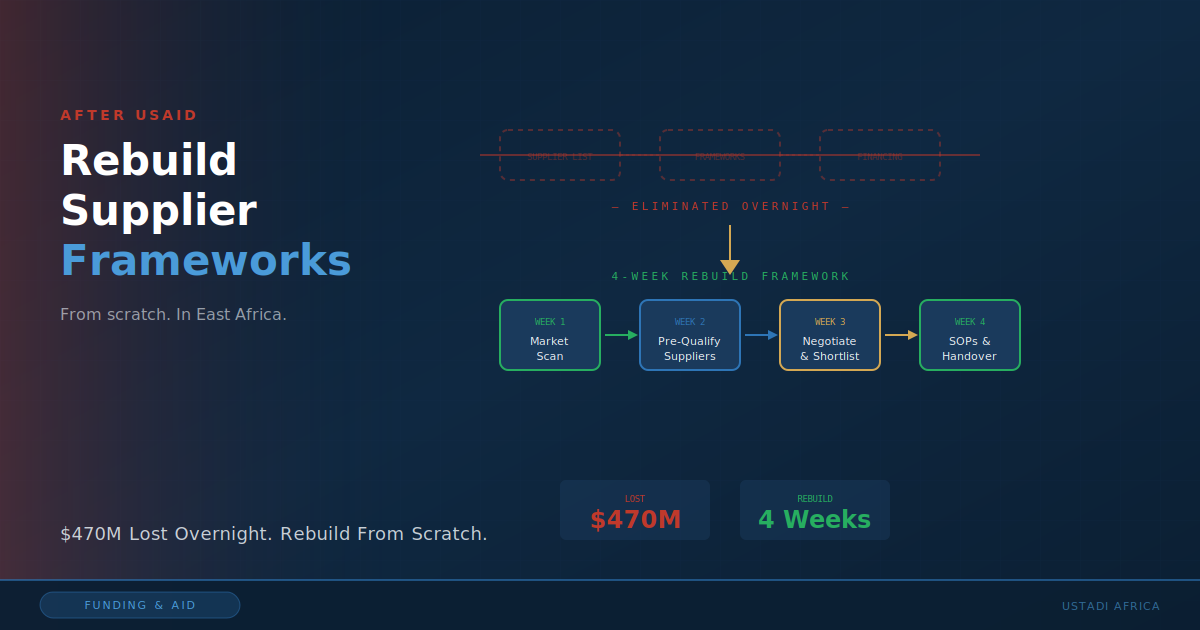
“USAID funding restructured. Our entire supplier framework is gone. We have no vetted alternatives.”
Rapid market scan, supplier pre-qualification, and new procurement SOPs for shorter, less predictable funding cycles.
Deliverable → vetted supplier register + procurement SOPs
“Eight months after disbursement. The implementing partner has absorbed thirty percent. The donor wants answers.”
Procurement pipeline diagnostic. Identify every bottleneck — approvals, specifications, vendor delays — and clear them.
Deliverable → absorption accelerator + pipeline clearance report
“County warehouse variance is 14%. Stock records are on paper. Nobody can reconcile what arrived versus what left.”
Physical inventory audit, root-cause analysis of losses, and a loss-prevention protocol with digital tracking.
Deliverable → inventory reconciliation + loss-prevention SOP
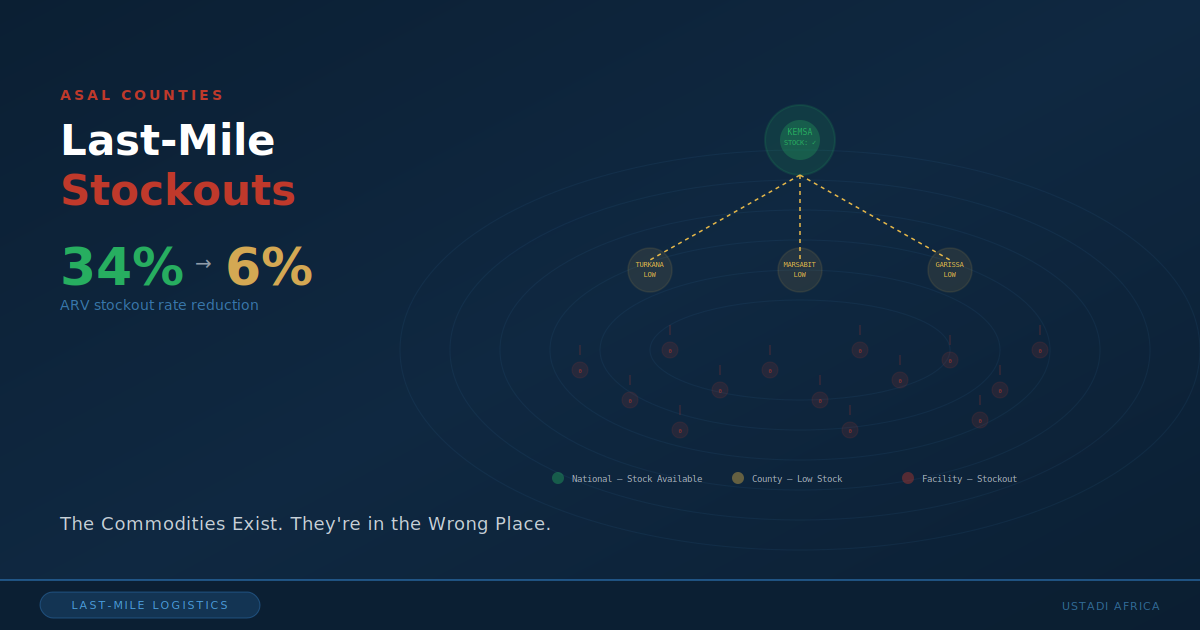
“ARVs are nationally available but three ASAL sub-counties report zero stock. The last-mile distribution is broken.”
Route optimisation, depot placement review, and redistribution protocol for remote and hard-to-reach facilities.
Deliverable → last-mile distribution redesign
“Procurement data is in five systems — IFMIS, Excel, WhatsApp, email, and someone’s notebook. We can’t report.”
Data audit across all procurement touchpoints. Consolidation roadmap with realistic automation sequencing.
Deliverable → data consolidation roadmap + system integration plan
NAIROBI 01.28°S · 36.82°E MOMBASA Port City KAMPALA Uganda ADDIS ABABA Ethiopia DAR ES SALAAM Tanzania KIGALI Rwanda
7+
Years in Practice
Kenya & East Africa
PhD
Research Rigour
Supply Chain Management
3
Core Services
Advisory · Research · Training
NGOs
Primary Clientele
DFIs, Govt & Corporates
Nairobi
Operating Base
East Africa-Focused
Supplier Risk Assessment Donor Audit Remediation e-GP Training & Registration Last-Mile Distribution Fix ESG Supply Chain Due Diligence Grant Absorption Acceleration Procurement Compliance Training Supplier Risk Assessment Donor Audit Remediation e-GP Training & Registration Last-Mile Distribution Fix ESG Supply Chain Due Diligence Grant Absorption Acceleration Procurement Compliance Training
Why Supply Chains Break in Africa

The Failures Are Specific.
So Are Our Fixes.

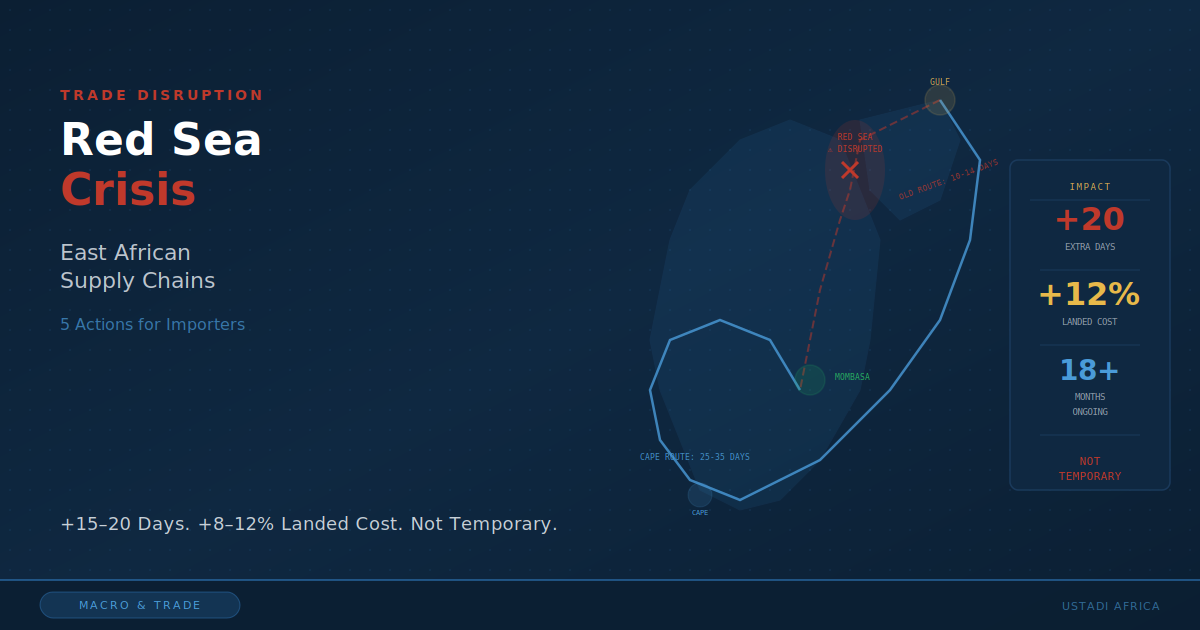
In 2025–2026, East African supply chains face compounding pressures. USAID funding restructuring has collapsed established supplier frameworks overnight. Kenya’s e-GP rollout has left county procurement teams unable to upload plans, stalling budget absorption below 30%. Red Sea route disruptions have added 15–20 days to Gulf import timelines. And across the region, procurement data remains fragmented across IFMIS, Excel, WhatsApp, and paper records — making compliance reporting nearly impossible.

These are not theoretical risks. They are observable failures happening inside organisations right now. The response is usually reactive: emergency procurements, audit findings, missed delivery windows. We work upstream — diagnosing the structural cause, not just treating the symptom.

Ustadi Africa exists because imported consulting frameworks do not account for informal supplier markets, volatile funding cycles, weak data infrastructure, or the regulatory complexity of operating across multiple East African jurisdictions simultaneously.

We diagnose before we prescribe
Every engagement begins with structured evidence gathering. We do not arrive with a pre-built solution looking for a problem to solve.
African-market frameworks, not European adaptations
Our methodologies are built around East Africa’s infrastructure realities, regulatory environment, and informal market structures — not adapted from OECD toolkits.
We build capability, not dependency
Our measure of a successful engagement is what the organisation can do independently six months after we leave. That shapes everything about how we work.
“Ustadi” is the Swahili word for mastery. It is a deliberate choice — reflecting our conviction that genuine expertise in a domain requires deep contextual knowledge, not only technical competence.
How We Work

A Disciplined Process.
No Phase Is Skipped.

Every engagement follows four structured phases. Recommendations without adequate diagnosis produce solutions for the wrong problem.

01
Diagnose
Evidence Gathering & Field Assessment

We map the operating environment — supply chain configuration, institutional constraints, risk exposure, and capability gaps — before forming any hypothesis about what needs to change.

Deliverable: Situation analysis and validated risk register
02
Analyse
Risk Modelling & Scenario Planning

Disruption scenarios are modelled and exposure levels quantified. We distinguish between risks that can be mitigated through systems design and those requiring contingency planning.

Deliverable: Risk model and prioritised intervention framework
03
Design
Context-Specific Strategy Development

Resilience strategies, research frameworks, or training programmes are designed to the client's specific operating environment and institutional capacity — not templated from previous engagements.

Deliverable: Strategy document and phased implementation plan
04
Embed
Implementation & Capability Transfer

Knowledge, systems, and processes are transferred into the organisation through structured handover, training, and follow-up support. Performance should continue after our engagement concludes.

Deliverable: Trained teams, embedded systems, and performance baseline
Our Services

What We Do.

Twenty specialist services across consulting, research, and training — each built for African market realities.

Twenty services, each documented with full descriptions, deliverables, and client fit. View All 30 Fixes
Who We Work With

Organisations Built for Africa.

Our clients operate in complex environments and need advisory that reflects that complexity.

🏛️
Government & Public Sector

Ministries, state corporations, and county governments navigating Kenya's public procurement framework and seeking to strengthen institutional capacity.

Procurement reviewsCompliance advisory
🌎
NGOs & Development Agencies

International and local NGOs, UN agencies, and implementing partners requiring research, evaluation, and training that meets international standards grounded in East African realities.

Programme evaluationsM&E design
🏢
Private Sector & Corporates

Multinationals entering East African markets and local businesses scaling operations, requiring supply chain risk assessment calibrated to the operating environment.

Market entry riskSupplier strategy
🏠
Development Finance Institutions

DFIs and multilateral organisations commissioning supply chain assessments and capacity building programmes for portfolio organisations across Africa.

Due diligenceRisk advisory
Client Perspectives

What Our Clients Say.

The measure of our work is the difference it makes in our clients' operations. Here is what some of them have shared.

The supply chain risk assessment Ustadi Africa conducted for our Kenya programme fundamentally changed how we plan procurement cycles. Their recommendations were specific, actionable, and grounded in an understanding of our operating environment that previous consultants had lacked.
Programme Director
International Development Organisation, Nairobi
We engaged Dr. Miano to review our procurement systems and deliver compliance training for our team. What stood out was the depth of preparation and the practical relevance of every session. Our audit outcomes improved measurably within two quarters.
Head of Procurement
State Corporation, Republic of Kenya
Ustadi Africa delivered a baseline study for our regional logistics programme that exceeded donor reporting standards. The methodology was rigorous, the fieldwork was thorough, and the final report required no revisions. That is rare in our experience.
M&E Lead
NGO Implementing Partner, East Africa
Our Principles

What Guides How We Work.

Operational commitments that shape every engagement — not aspirational values on a wall.

01
Context before frameworks

Every operating environment is specific. Before we recommend any approach, we invest time understanding the institutional landscape, infrastructure constraints, regulatory environment, and political economy of the context. Generic solutions applied without that understanding produce generic results.

→ Diagnosis always precedes prescription
02
Evidence before conclusions

We do not offer opinions dressed as analysis. Our findings are built on primary evidence — field data, stakeholder engagement, document review, and quantitative modelling — documented in ways that can be interrogated and tested. If the evidence does not support a conclusion, we say so.

→ Our credibility rests on intellectual honesty
03
Capability, not dependency

The most consequential outcome of any engagement is not the report or training we deliver — it is what the organisation can do independently after we leave. We design every engagement with that endpoint in mind, and we measure our success accordingly.

→ We succeed when our clients no longer need us

Describe Your Supply Chain Breakdown. We Will Diagnose It.

Tell us about your situation. We will give you an honest assessment of whether and how we can help — with no obligation.

About Ustadi Africa

A Consulting Practice Built
From Inside African Markets.

Ustadi Africa was founded on a straightforward observation: organisations operating in African markets were not struggling from lack of effort or investment. They were struggling because the consulting frameworks, research tools, and training programmes available to them had been built for different environments — and they were paying for that mismatch every day.

We exist to close that gap. Through specialist business consulting, rigorous organisational research, and practically grounded professional training, we help organisations build the systems, knowledge, and capabilities to operate effectively — and durably — across African markets.

Our Story

Why Ustadi Africa Exists.

The name Ustadi is Swahili for mastery. It reflects a deliberate commitment: that meaningful advisory in a complex domain requires not just technical knowledge, but deep contextual understanding of the environment in which that knowledge is being applied.

Ustadi Africa was founded in response to a gap that persists across Kenya’s public and development sectors: procurement decisions made without adequate market intelligence. Training programmes built on international curricula that do not reflect Kenyan regulatory realities. Supply chain assessments that map risks using tools designed for data-rich, stable environments — applied to contexts where data lives in WhatsApp groups and Excel files.

We are grounded in Nairobi, draw on seven years of active advisory experience across East Africa, and underpin every engagement with structured, evidence-based diagnosis before any recommendation is made.

Our clients include NGOs managing donor compliance under USAID, ECHO, and FCDO regimes; county governments navigating Kenya’s e-GP rollout; DFIs tracking absorption rates on multi-year programmes; and private sector organisations facing supplier volatility in markets shaped by FX fluctuation, import dependency, and Red Sea route disruptions.

Research-Driven Methodology
Every engagement is grounded in structured evidence gathering. We do not recommend before we have understood.
Africa-Specific Frameworks
Our methodologies are built for East Africa’s operating realities — not adapted from toolkits designed elsewhere.
Capability Transfer as the Goal
We build organisational capability that outlasts our engagement. The measure of success is what the organisation can do without us.
Institutional Credibility
Research-grounded methodology, NITA-accredited training, and seven years of cross-sector advisory across East Africa.
Mission, Vision & Values

The Commitments That
Shape Our Work.

Our Mission

To strengthen supply chain resilience and organisational effectiveness across East Africa through rigorous research, evidence-based advisory, and practically grounded capacity building that outlasts the engagement.

Our Vision

To become the primary reference point for supply chain advisory in Africa — the firm that organisations turn to when they need analysis and recommendations grounded in genuine understanding of how African markets operate.

Our Values

Intellectual rigour without academic detachment. Honesty when findings challenge the client’s assumptions. Contextual specificity over generic frameworks. Long-term capability over short-term deliverable volume.

Our Process

How We Conduct Every Engagement.

Recommendations without adequate diagnosis produce solutions for the wrong problem. Every engagement follows four structured phases.

01
Diagnose
Contextual Analysis

We map the operating environment — supply chain configuration, institutional constraints, regulatory landscape, and stakeholder dynamics — before forming any view on what needs to change.

02
Analyse
Risk & Evidence Modelling

Primary data, field observations, and quantitative modelling are combined to generate findings that can withstand rigorous scrutiny. We distinguish between opinion and evidence throughout.

03
Design
Context-Calibrated Solutions

Strategies, frameworks, and training programmes are designed to the client’s specific operating environment, institutional capacity, and implementation constraints.

04
Embed
Transfer & Sustainment

Knowledge, systems, and processes are transferred deliberately into the organisation. We define performance benchmarks at the outset so that post-engagement progress can be measured.

Leadership

The Practice is Led by
Dr. Benson Miano.

Dr. Benson Miano — Founder, Ustadi Africa
7+
Years Experience
Dr. Benson Miano
Founder & Principal Consultant — Ustadi Africa

Dr. Miano’s advisory practice sits at the intersection of supply chain systems design, institutional research, and organisational capacity building across Africa. His research at Jomo Kenyatta University of Agriculture and Technology focuses on procurement implementation practices and performance in Kenyan state corporations — generating findings with direct relevance to public sector supply chain reform and procurement governance.

Prior to founding Ustadi Africa, Dr. Miano held an operational role at KEMSA (Kenya Medical Supplies Authority), gaining direct exposure to the practical challenges of public sector procurement in a resource-constrained, high-accountability environment. He subsequently spent seven years in active consulting across Kenya’s public sector, development sector, and private sector — alongside postgraduate teaching in procurement and supply chain management at JKUAT.

That combination — research rigour, operational experience, and years of advisory practice — shapes an approach that is analytically precise and practically grounded.

Supply Chain ResilienceProcurement SystemsDevelopment ResearchRisk ModellingPublic Sector ReformAfrica
Company Registration — Republic of Kenya
Ustadi Africa is the trading name of Umahiri Advisory, registered as a business name under the laws of Kenya with the Registrar of Companies.
Business Name: Umahiri Advisory  ·  Registration No.:

Your Supply Chain Has a Specific Failure Point. Tell Us What It Is.

Describe the operational breakdown — audit finding, procurement bottleneck, supplier failure, data gap. We will tell you whether we can fix it and exactly how we would approach it.

Systems & e-GP 4
Procurement 3
Distribution 3
Funding 3
Compliance 3
Scaling 3
AI & Data 5
Training 3
Research 3
Digital Systems & e-GP

Your Procurement System Isn’t Working. Here’s Exactly Why.

Kenya’s e-GP went live in July 2025. Most teams weren’t trained. Most budgets weren’t uploaded. Most suppliers can’t register.

Government & Counties

Your e-GP procurement plan won’t upload — so you can’t issue a single purchase order

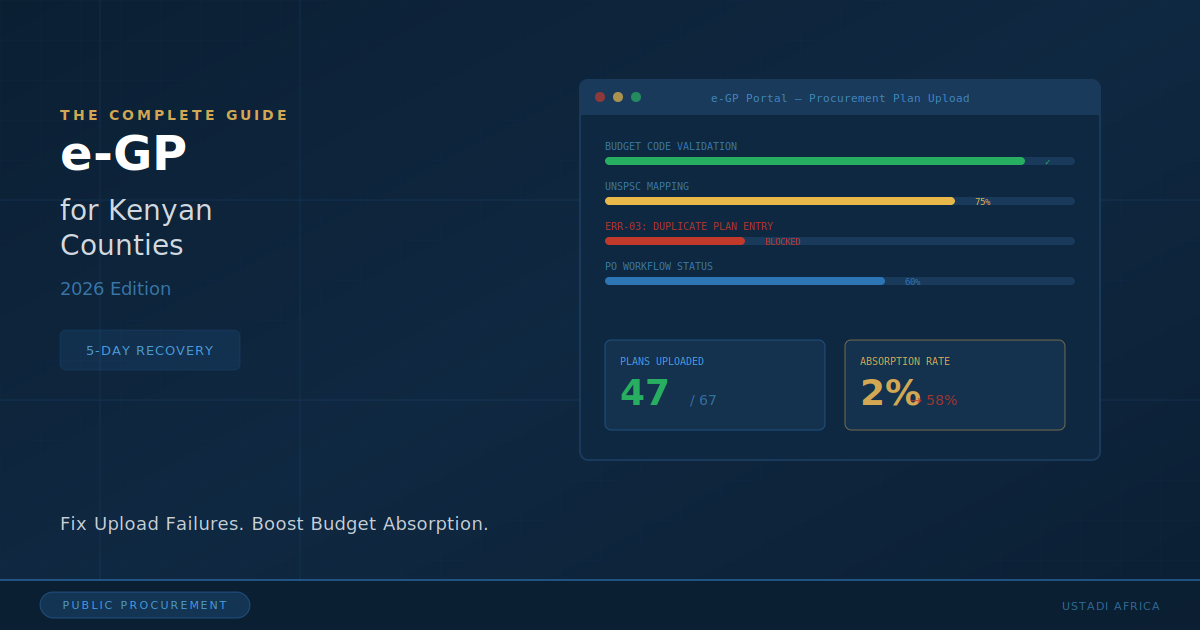
Twenty counties recorded zero development spending in Q1 FY 2025/26 because procurement plans couldn’t be uploaded to the e-GP system. Budget absorption rate: 2%. If your team is stuck on error screens, we train them screen-by-screen until every plan is uploaded and every PO is processing.

Deliverable: Hands-on e-GP training for your procurement team + procurement plan upload fix
Suppliers to Government

You can’t register on egpkenya.go.ke — so you’re locked out of government tenders

UNSPSC codes nobody understands. Document uploads that fail. Support lines that never answer. If you’ve been supplying the county for years and suddenly can’t bid on anything, we get your registration completed correctly the first time.

Deliverable: Completed e-GP supplier registration + correct documentation package
All Organisations

You paid for an ERP or procurement system — but your team still uses Excel and WhatsApp

The vendor installed it, ran a two-day training, and left. Nobody uses it because it doesn’t match how your team works, the data was never migrated, or the people who were trained have moved on. We diagnose which of these it is and get your team operating inside the system you already paid for.

Deliverable: System adoption audit + staff re-onboarding programme
All Organisations

Your invoices, POs, and approvals take days because everything travels by hand

Purchase requisitions walk across the building. Approvals sit in someone’s email for three days. The same invoice gets entered into three separate systems. We map the document flow, cut unnecessary steps, and set up routing so approvals take hours, not weeks.

Deliverable: Streamlined approval workflow + reduced processing time
Facing a digital procurement problem?
Describe Your Situation
Buying & Procurement

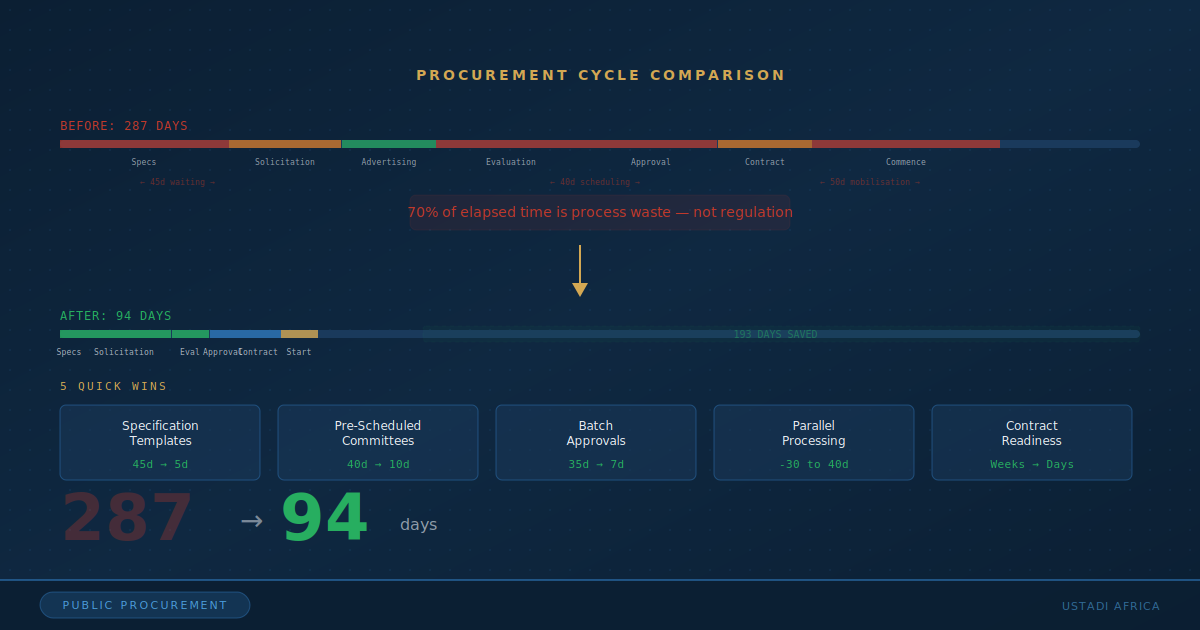
You Can’t Find Reliable Suppliers. Your Tenders Take 10 Months.

The USAID pipeline collapsed. Supplier risk is unmonitored. County budget absorption is in single digits.

NGOs & INGOs

Your USAID supplier framework is gone — you need to find and vet local suppliers from scratch

$470 million per year to Kenya vanished when USAID collapsed. 83% of foreign aid contracts terminated. Pre-approved suppliers, framework agreements, commodity financing — all gone. We map the local supplier landscape for your specific commodities, run assessments, and set up procurement processes that work with shorter, less predictable funding.

Deliverable: Vetted local supplier shortlist + new procurement SOPs
Private Companies

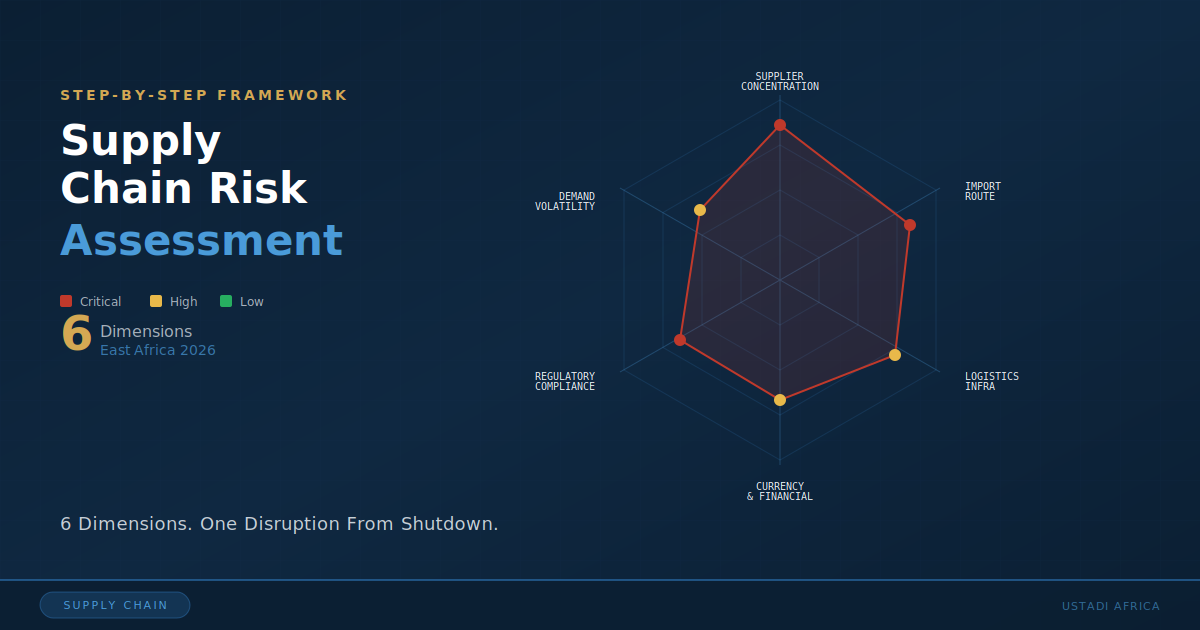
Your main supplier fails and you have no backup — you are one disruption from shutdown

No supplier performance data. No risk scoring. No early warning. Just gut feeling. We audit your supplier base, identify every concentration risk, build qualified backup lists, and set up tracking so you see trouble coming before it arrives.

Deliverable: Supplier risk register + qualified backup supplier list + performance tracking
Government & Counties

Your procurement cycle takes 10 months — projects stall before construction starts

The IMF estimates half of Kenya’s 1,000+ government projects have stalled. Revival cost: KSh 1 trillion. Counties spent 2% of KSh 219B development budget in Q1. We map every step, find where things stall, and redesign so you spend your budget before the financial year closes.

Deliverable: Procurement bottleneck analysis + redesigned workflow
Procurement stuck?
Talk to Us
Deliveries & Logistics

Your Shipments Are Late. Your Medicines Don’t Reach Clinics.

Shipping from the Gulf has doubled. Last-mile health commodity distribution is failing. Most organisations have zero visibility between payment and delivery.

Private Companies

Your imports from the Gulf now take 5 weeks instead of 14 days — and cost twice as much

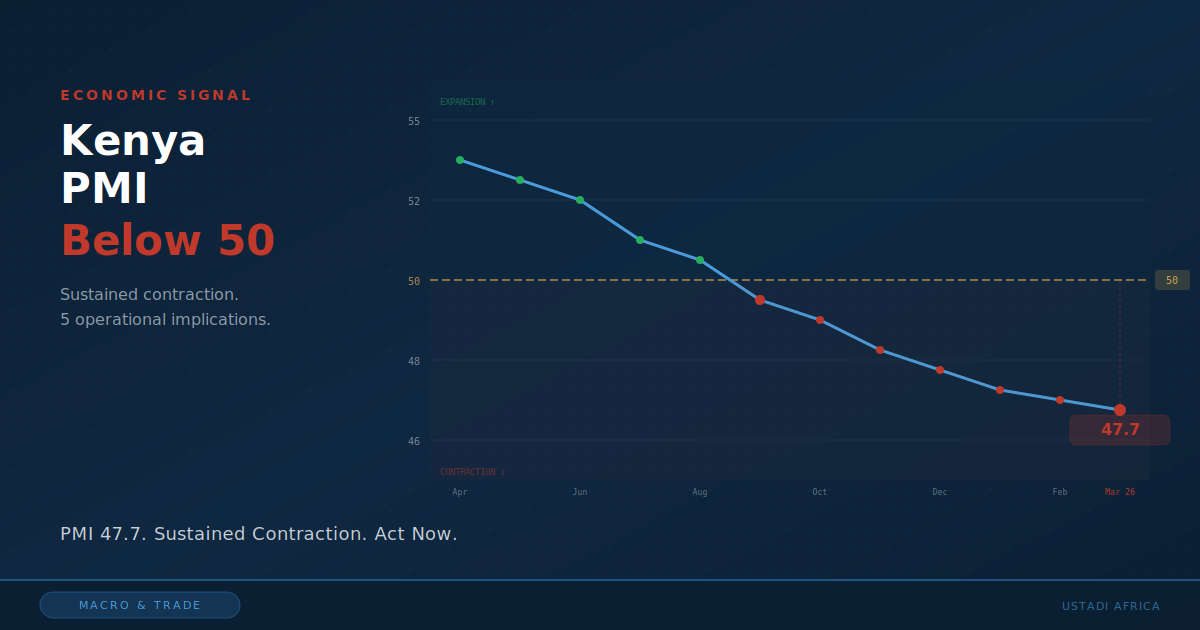
The Strait of Hormuz disruption forced rerouting through southern Africa. Kenya’s PMI dropped to 47.7 in March 2026. Input costs rising fastest in two years. We map your import exposure, find alternative routes and regional sourcing options, and reduce your single-corridor dependency.

Deliverable: Import route risk map + alternative sourcing plan
NGOs & Health Programmes

You have enough ARVs nationally — but three facilities reported zero stock last week

The drugs exist. They’re in the wrong place. Wrong quantities ordered per facility. Nobody knows what’s on shelves at each location. No redistribution process. The April 2025 Global Fund audit flagged exactly this in Kenya. We diagnose which part of your distribution chain is failing and fix it with the tools you already have.

Deliverable: Facility-level stock diagnostic + redistribution process
All Organisations

You find out deliveries are late only when they don’t show up — tracking means calling drivers

Zero visibility between payment and arrival. No alerts, no status updates. Only 13% of organisations globally have full supply chain visibility. We set up practical tracking — not a million-shilling IT system — that flags delays early enough to act.

Deliverable: Shipment tracking process + delay alert protocol
Logistics disruptions?
Describe the Problem
Money & Payments

The Budget Exists. The Grant Was Disbursed. Nothing Has Been Purchased.

KSh 606 billion in unpaid government supplier bills. Grant absorption rates below 30%. Hidden costs nobody can identify.

Private Companies

The government owes you millions for goods delivered 6 months ago — and you’re running out of cash

KSh 606 billion in accumulated pending bills. KSh 351 billion still unpaid. Debt servicing consumed 67.1% of government revenues. We help you diversify your client base and restructure contract terms so late payment doesn’t destroy your business.

Deliverable: Client diversification plan + contract terms review
DFIs & Development Partners

You disbursed the grant 8 months ago — the implementing partner has spent less than 30%

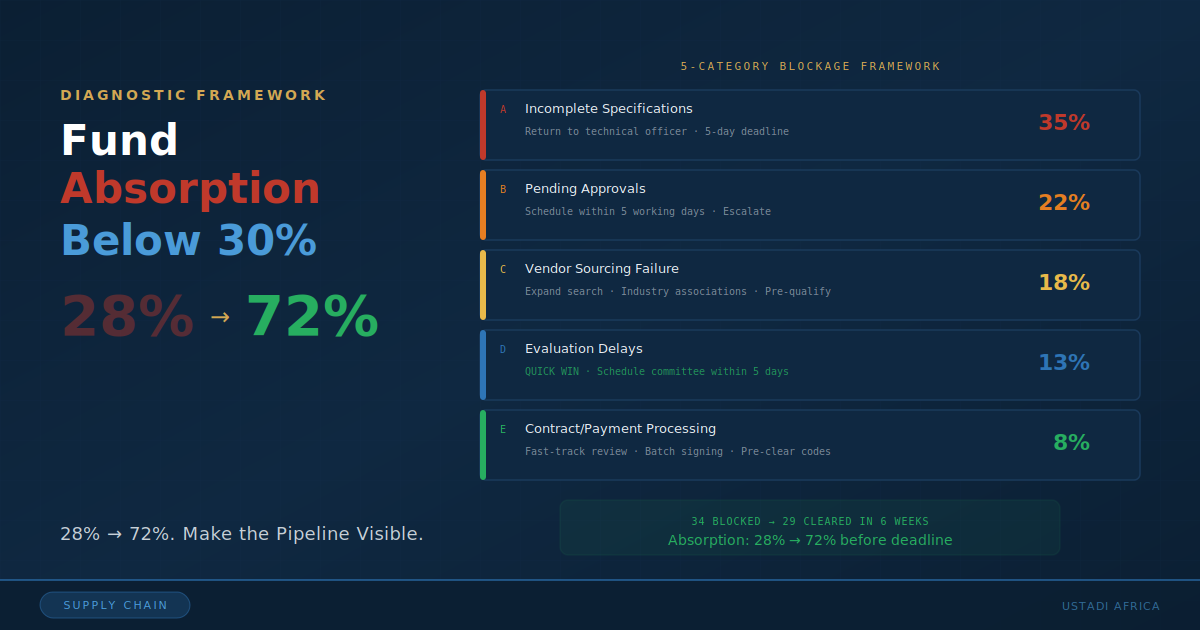
Low fund absorption: the most persistent problem in development finance in Africa. Procurement too slow, compliance requirements can’t be met fast enough, not enough staff. We do rapid diagnostics to find exactly which steps are blocking disbursement and fix them.

Deliverable: Procurement pipeline diagnostic + absorption accelerator
All Organisations

Your operating costs keep rising but nobody can tell you exactly where the money goes

Transport costs up. Procurement costs up. Everything “expensive.” But nobody can say which supplier is overcharging, which route costs too much, or whether your logistics spend is reasonable. We break down costs category by category, benchmark against your sector, and show exactly where money is leaking.

Deliverable: Supply chain cost analysis + savings identification
Money stuck in your supply chain?
Get Help
Donor Compliance & Audits

The Auditor Flagged You. Your Team Thought They Were Doing Everything Right.

Global Fund, USAID, EU — each donor has specific compliance requirements that most internal teams don’t fully understand.

NGOs & INGOs

The donor found “material noncompliance” in your procurement — your grant is at risk

The 2025 Global Fund audit flagged all three Kenya Principal Recipients. USAID OIG flagged MEDS for material weakness. Kenya Red Cross flagged for noncompliance. Your team wasn’t cutting corners — they followed a process that doesn’t produce the evidence trail donors require. We review against your specific donor’s compliance checklist and close every gap.

Deliverable: Donor compliance gap analysis + remediation plan
DFIs & Donors

You can’t prove the commodities you funded actually reached the communities

Paper registers don’t match digital records. Stock adjustments without justification. Audit trail breaks at county level. We design traceability processes that work without expensive technology — structured documentation and reconciliation checkpoints.

Deliverable: Commodity traceability framework + reporting templates
Multi-Partner Projects

Five partners on one project — nobody has the full picture of what has been delivered

Each partner tracks their own piece. Decisions made on incomplete data. Updates through email chains and monthly meetings producing no actionable information. We set up shared reporting frameworks giving all partners pipeline visibility without changing core systems.

Deliverable: Multi-partner reporting framework + coordination protocol
Audit findings to close?
Talk to Us
Expansion & Scaling

You’re Growing. Your Supply Chain Wasn’t Built for This.

New country. New counties. More volume. Different regulations. The setup that worked small will break at scale.

Private Companies

You’re entering Uganda or Tanzania next quarter — but don’t know any suppliers or clearance agents there

AfCFTA reduced tariffs but setting up an actual supply chain in a new country requires knowing suppliers, customs, tax regimes, and logistics providers. We do market entry assessments — supplier mapping, regulatory scan, logistics analysis, and a setup plan — before you commit capital.

Deliverable: Market entry supply chain assessment + setup plan
All Organisations

Every time you scale up, things break — orders lost, warehouses overflow, staff overwhelmed

Processes that worked at small volume buckle at three times the load. We redesign operations with clear workflows, defined roles, and the right automation so more volume doesn’t mean more chaos.

Deliverable: Scalable operations blueprint + role and responsibility matrix
NGOs & Health Programmes

You’re expanding into Turkana or Marsabit — your Nairobi logistics model won’t work there

Seasonal roads. No cold chain. Few suppliers. 300km between delivery points. ASAL counties need a completely different supply chain approach. We design for your specific target area, not a copy-paste from Nairobi.

Deliverable: ASAL-adapted supply chain design + local partner shortlist
Scaling into new territory?
Tell Us Where
AI, Data & Technology

Your Board Asks About AI. Your Data Lives in Five Spreadsheets and a WhatsApp Group.

AI cannot fix what it cannot read. Before automation, you need clean data, connected systems, and processes that produce consistent information.

All Organisations

Your procurement data is scattered across five systems and three spreadsheets — nothing matches

93% of humanitarian workers use AI individually. Only 8% have integrated strategies. Data fragmentation is the biggest blocker. We audit your data, clean it, connect it, and build a framework your team can maintain. Then AI tools actually work.

Deliverable: Data audit + unified data framework + AI readiness roadmap
All Organisations

Every quarter you are either overstocked or out of stock — because nobody forecasts demand

You order what you ordered last time and hope. No historical analysis, no seasonality adjustment, no consumption tracking. We set up practical demand planning using your actual data — simple methods first, AI-assisted only when your data supports it.

Deliverable: Demand planning model + forecasting process
All Organisations

You only discover problems when they become emergencies — no early warning system

No predictive alerts. No exception monitoring. Permanent firefighting mode. We identify the indicators that predict problems in your operation and set up monitoring so you catch issues before they become crises.

Deliverable: Risk indicator framework + monitoring dashboard or alert system
All Organisations

You invested in technology but nothing changed — ROI is zero and your team is sceptical

Wrong use cases. No adoption strategy. Technology on top of broken processes. We find why your tech isn’t delivering and either fix the implementation or redirect tools to use cases that actually improve operations.

Deliverable: Technology utilisation audit + implementation fix plan
NGOs & Development

Every donor proposal asks about your “digital strategy” and you don’t know what to write

Donor emphasis on innovation disadvantages smaller NGOs. Many already do innovative things but don’t frame it as “digital strategy.” We identify realistic improvements you can credibly propose and actually implement.

Deliverable: Digital strategy brief + proposal-ready innovation narrative
Need help with data or technology?
Start the Conversation
Training & Capacity Building

Your Team Doesn’t Know How. We Train Them Until They Do.

Not theoretical workshops. Hands-on, practical training on the exact systems, regulations, and processes your team needs to operate. NITA-accredited where applicable.

Government & Counties

Your procurement team can’t use the e-GP system — they need screen-by-screen training, not a manual

The system went live but training was a two-hour overview. Your team needs hands-on practice with real procurement plans, real purchase orders, real bid evaluations inside the actual e-GP platform. We train until every officer can operate independently.

Deliverable: Practical e-GP training programme (3–5 days) + post-training support
NGOs & All Organisations

Your staff don’t understand PPADA, donor procurement rules, or compliance documentation requirements

They follow internal SOPs but those SOPs don’t produce the documentation that Global Fund, EU, or government auditors require. We run targeted compliance training on your specific donors’ procurement requirements — not generic procurement theory.

Deliverable: Donor-specific procurement compliance training + documentation templates
All Organisations

You hired new procurement or logistics staff and they need to be operational within weeks, not months

New hires sit through orientation but don’t understand your supply chain systems, supplier relationships, or reporting requirements. We design and deliver structured onboarding programmes tailored to your specific operations so new staff contribute faster.

Deliverable: Custom onboarding programme + reference materials + competency assessment
Need training for your team?
Discuss Requirements
Research & Evaluation

You Need Evidence Before You Decide. We Produce It.

Needs assessments, baseline studies, programme evaluations, market research, and supply chain diagnostics. Commissioned by NGOs, government, DFIs, and development agencies.

NGOs & Development Agencies

You need a baseline study or needs assessment before designing a programme — but don’t have in-house research capacity

Donors require evidence-based programme design. You need structured data on current conditions, gaps, and community needs before you can write the proposal or design the intervention. We conduct field-based assessments using mixed methods — quantitative surveys, key informant interviews, focus groups — and deliver reports that meet institutional standards.

Deliverable: Baseline study or needs assessment report + data sets + methodology documentation
DFIs & Government

Your programme has been running for two years and the donor wants an independent evaluation

Mid-term reviews, end-of-programme evaluations, and impact assessments that stand up to institutional scrutiny. We evaluate against your programme’s theory of change, assess what worked and what didn’t, and produce findings the donor can use for future funding decisions.

Deliverable: Independent evaluation report + recommendations + lessons learned brief
All Organisations

You need market intelligence on suppliers, logistics options, or regulatory conditions in a new geography

Before you enter a new market, expand to a new county, or restructure your supply chain, you need data on what’s actually on the ground — not assumptions from Nairobi. We conduct targeted market assessments covering supplier landscapes, logistics infrastructure, regulatory requirements, and cost structures.

Deliverable: Market assessment report + supplier directory + regulatory summary
Need research or evaluation?
Brief Us

Don’t See Your Exact Problem?

Describe what’s happening. We’ll tell you whether we can fix it, how long it takes, and what it costs. No jargon. No runaround.

Industries & Sectors

Sector-Specific
Supply Chain Expertise.

Each sector in Africa has distinct procurement rules, compliance requirements, and operational conditions. We don’t apply one-size-fits-all frameworks. We build solutions specific to your sector.

SECTORS WE SERVE
🏛️
Public Sector & Government
PPADA compliance, e-GP, county procurement, budget absorption
🌎
NGOs & Development
Humanitarian logistics, donor compliance, last-mile delivery
🏢
Private Sector
Supplier risk, import logistics, regional expansion
🏠
DFIs & Investors
Disbursement readiness, ESG due diligence, project appraisal
Government & Public Sector

Kenya’s Public Procurement Framework Demands Specialist Knowledge.

Kenya’s Public Procurement and Asset Disposal Act (PPADA 2015) is one of the most technically developed procurement frameworks in sub-Saharan Africa. It is also one of the most challenging to implement. The gap between statutory requirements and operational capacity creates compliance risk, audit exposure, and systemic inefficiency — particularly at the county level where e-GP adoption is stalling budget absorption.

We bring seven years of structured research into procurement implementation practices in Kenyan state corporations — a depth of understanding grounded in primary evidence, not general consulting assumptions.

We work with government ministries, state corporations, county governments, and parastatals on e-GP system recovery, procurement compliance training, PPADA audit readiness, and institutional performance assessments.

Relevant Services
Procurement Compliance Training Public Procurement Advisory Procurement Systems Review Supply Chain Risk Assessment Needs Assessment
PPADA
2015
Kenya’s primary procurement legislation — the framework we know in depth
7+yrs
Research Focus
Primary research focus: procurement implementation in Kenyan state corporations
NITA
Accredited
Our training meets national accreditation standards for public sector delivery
7+
Years
Active advisory experience in Kenya’s public and parastatal sector
Typical Challenges We Address
Procurement threshold management and documentation gaps
Evaluation committee composition and conflict of interest management
Contract management obligations and supplier performance monitoring
Audit readiness and regulatory compliance documentation
NGOs & Development Partners

Research and Advisory That Meets Institutional Standards — and Field Realities.

International NGOs, UN agencies, and development partners in East Africa face a compound challenge in 2025–2026: USAID funding restructuring has collapsed established supplier frameworks. 2 CFR 200 compliance requirements demand traceability that most field procurement systems cannot produce. And the gap between donor reporting standards and ground-level data availability grows wider with each audit cycle.

We understand this tension from the inside. Our advisory and research services are built specifically for the NGO operating context — including the procurement frameworks, accountability requirements, and operational constraints of USAID, FCDO, ECHO, EU, Global Fund, and UN agencies.

We provide donor compliance remediation, procurement system audits, needs assessments, programme evaluations, and supply chain advisory that meet institutional quality standards while being grounded in how procurement actually works across East African field operations.

Relevant Services
Needs Assessment Programme Evaluation Baseline Study Humanitarian Logistics Training M&E Framework Design NGO Supply Chain Advisory
USAID
FCDO · EU · UN
Familiarity with major donor procurement and reporting requirements
Evidence
Methodology
Research that meets institutional peer review standards
Field
Grounded
Methods calibrated to East African data availability and access conditions
Full
Programme Cycle
Advisory from design through evaluation across the programme lifecycle
Typical Challenges We Address
Research that satisfies donor standards but lacks operational specificity
Procurement compliance under humanitarian operating conditions
Last-mile delivery in areas with unreliable commercial logistics
M&E frameworks with indicators that cannot actually be measured
Private Sector & Corporates

Supply Chains Designed for the Environment You’re Actually Operating In.

Multinational corporations entering East African markets typically bring supply chain models designed for their home operating environments. Those models embed assumptions — about infrastructure reliability, supplier market depth, regulatory predictability, and data availability — that do not hold across Africa.

The result is a supply chain that works in theory but fails in practice. Delivery lead times that are consistently longer than planned. Costs that are persistently higher than budgeted. Quality failures traced back to suppliers who were approved on paper but inadequately assessed in the field.

We help private sector organisations build supply chains that are calibrated to the East African environment from the outset — through risk assessment, supplier strategy, resilience planning, and the practical advisory that comes from seven years of operating in this market.

Relevant Services
Supply Chain Risk Assessment Supplier Diversification Strategy Business Continuity Planning Market Assessment Supply Chain Resilience Strategy Last-Mile Logistics Advisory
Entry
to Operations
Advisory from market entry risk assessment through operational optimisation
Local
Market Knowledge
Seven years of supplier market intelligence in East Africa
Risk
Quantified
Exposure assessments with measurable likelihood and impact estimates
Practical
Solutions
Recommendations calibrated to what is feasible with available resources
Typical Challenges We Address
Concentrated supplier exposure with no adequate qualified alternatives
Infrastructure-dependent supply chains in infrastructure-constrained markets
Currency volatility affecting procurement cost and supplier viability
Last-mile distribution challenges beyond the reach of commercial networks
Development Finance Institutions

Supply Chain Due Diligence and Research That Withstands Institutional Scrutiny.

Development finance institutions making portfolio decisions in East Africa require supply chain due diligence, procurement governance assessments, and capacity building programmes that meet the rigorous standards of institutional review. Financial due diligence and legal due diligence are standard parts of the investment process. Supply chain due diligence — which captures the operational exposure that comes from procurement fragility and logistics risk — is less consistently applied, but often the most consequential.

We provide advisory and research services to DFIs directly, and to portfolio organisations as part of DFI-funded technical assistance programmes. Our combination of research-grounded methodology and operational advisory experience makes us well-suited to the multi-layered requirements of development finance mandates.

We understand what institutions need: findings that are methodologically defensible, recommendations that are operationally feasible, and documentation that holds up to the scrutiny of institutional review processes.

Relevant Services
Supply Chain Due Diligence Programme Evaluation Organisational Research Supply Chain Risk Assessment Procurement Systems Review
Due
Diligence
Supply chain assessments structured for investment decision-making
Donor
Standards
Research methodology meeting multilateral and bilateral institutional standards
Portfolio
Advisory
Technical assistance for DFI portfolio organisations in East Africa
East
Africa Focus
Deep familiarity with the operating context in which portfolios are deployed
Typical Mandates We Support
Pre-investment supply chain due diligence for East African portfolio companies
Midterm and endline evaluation of DFI-funded programmes
Procurement governance assessment for portfolio organisation improvements
Supply chain capacity building as part of technical assistance packages

Tell Us About Your Sector and Challenge.

Each sector brings specific requirements. Describe the situation and we will explain how we have approached similar challenges before.

Field Intelligence — Africa

Supply Chain
Insights

Grounded analysis on procurement reform, supply chain disruptions, and the forces shaping how organisations operate in African markets. Published when something significant happens — not on a schedule.

6
Articles
1,182
Site Reads
WHAT YOU GET
Evidence-Based Analysis
Data from Global Fund, IMF, CBK, and field research
Sector-Specific Intelligence
NGO, government, private sector, and DFI perspectives
Actionable Takeaways
What it means for your supply chain operations

Fuel Is Still 178 Bob. But Try Finding It.

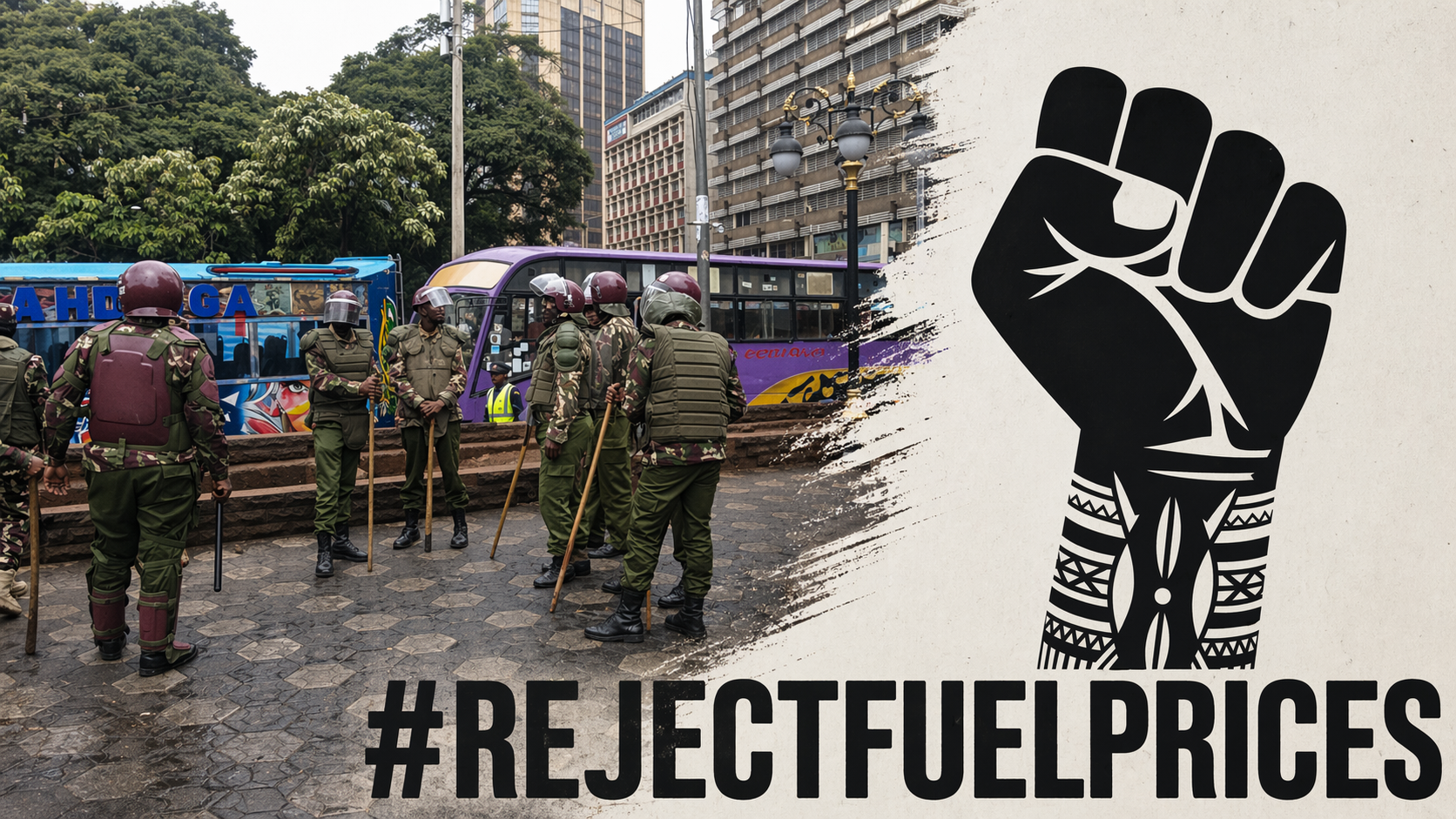
EPRA says KSh 178. The government says it has enough. Oil marketers are threatening to stop selling. Three sides, one standoff and Kenyans are queuing at dry pumps. What does this mean for the already burdened Wanjiku?
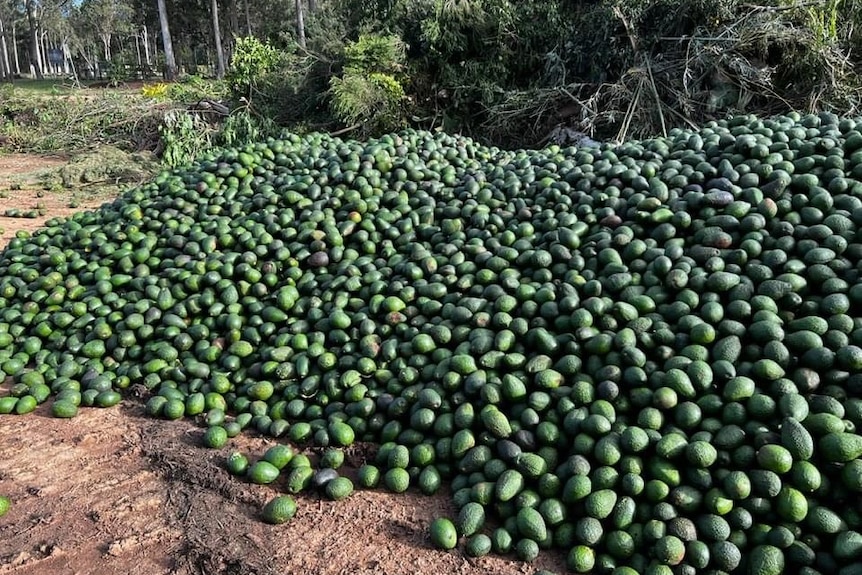
Fuel is still KSh 178.28. EPRA hasn't moved the price.

But try fueling in Langata Road this week. Ama Eldoret. Ama Kitale.

Some stations are rationing. Others have just gone dry.

Mimi nilinotice juzi — went to three stations before I found petrol. The third one had a queue. Not the normal "lunch hour" queue. The "something is wrong" queue.

So what's happening?

The Petroleum Outlets Association of Kenya said it clearly — the biggest fuel suppliers to Kenya are rationing product. Some rural stations have closed temporarily.

Meanwhile, the government says there's no shortage. The PS for Energy said yesterday that what we're seeing is hoarding and speculation by marketers.

Marketers are quiet.

Here's what I can tell you from verified numbers:

Kenya imports ALL its fuel. Every drop. Our refinery in Mombasa? Dormant. Importers are required by law to hold only 21 days of stock. That's our buffer. Three weeks.

The Strait of Hormuz — where about 21% of the world's oil passes — has essentially shut down. UNCTAD data shows ship transits dropped by 97%. From about 100 ships daily to one or two.

Brent crude has crossed $100 a barrel.

And EPRA is still holding at 178 bob.

I said in my last post — watch the April 15th review. That review will price what's arriving now. But what if what's arriving now... doesn't arrive?

Sasa this is not just a petrol station problem. When fuel gets scarce, the matatu fare goes up. The cost of moving mangoes from Kitui to Nairobi goes up. The boda boda delivering medicine in Roysambu charges more —a or doesn't go at all. Wait until buses za Kamulu pale BS ask for 500 to Malaa

Fuel moves everything. When it stops, supply chains don't slow down — they break.

Kama una fleet, distribution network, or logistics operation in Kenya right now — this is not the week to wait and see. This is the week to plan.

Na kama uko na gari ndogo, its time to make it electric…is it even possible?

What are you seeing kwa ground? Especially those in transport — how bad is it where you are?

#SupplyChain #KenyaBusiness #UstadiAfrica

Stay Ahead of Supply Chain Developments.

Follow Dr. Miano on LinkedIn for analysis grounded in East African market realities.

Get in Touch

Tell Us What’s
Not Working.

Describe the problem. We tell you if we can help, how long it takes, and what it costs. One business day response.

Contact Ustadi Africa
Reach Us Directly

Contact Information.

Email
info@ustadiafrica.com
Project briefs, service enquiries, general questions. We respond within one business day.
Phone & WhatsApp
+254 704 299 773
Available Monday to Friday, 8am to 6pm East Africa Time.
Base Location
Nairobi, Kenya
Serving clients across East Africa. In-person engagements in Nairobi by arrangement.
LinkedIn
Connect and follow for supply chain perspectives on African supply chains.
What to Include in Your Message

The more context you can provide, the more useful our initial response will be. Helpful to include: your organisation type and sector, the specific challenge you are facing, and whether you have a defined brief or are still scoping the engagement.

Send a Brief

Describe Your Situation.

Legal

Privacy Policy

Last updated: April 2026

1. Introduction

Ustadi Africa (the trading name of Umahiri Advisory, registered in Kenya) is committed to protecting the privacy of visitors to ustadiafrica.com. This policy explains what data we collect, how we use it, and your rights.

2. Data We Collect

We collect minimal data. Our site does not require user registration, and we do not sell, trade, or otherwise transfer personal information to third parties.

Analytics data: If you consent, we collect anonymised usage data through Google Analytics 4 (measurement ID G-3BXBTJGHDT). This includes pages visited, approximate geographic region, device type, and referral source. IP addresses are anonymised before processing.

Contact form submissions: If you submit an enquiry through our contact form, we collect the information you provide (name, email, organisation, and message). This data is processed through Formspree and used solely to respond to your enquiry.

3. Use of Cookies

Our site uses a cookie consent mechanism. On your first visit, you are asked whether you accept analytics cookies. If you decline, no analytics cookies are set and no tracking data is collected.

Strictly necessary storage: We store your cookie preference in your browser's local storage (key: ua_consent). This is not a cookie and contains no personal information — only your consent choice.

4. Google Analytics

When analytics consent is granted, Google Analytics collects anonymised browsing data. We have enabled IP anonymisation, and we do not use Google Advertising features. Google's privacy policy applies to data processed by their services. You can opt out at any time by updating your cookie preferences via the banner or by clearing your browser's local storage.

5. Your Rights

You have the right to decline analytics tracking at any time through the cookie consent mechanism on this site. If you have submitted a contact form enquiry and wish to request deletion of your data, you may contact us at the address below.

Since we collect only anonymised analytics data and voluntary contact form submissions, we hold very little personal information. We retain contact form submissions only as long as necessary to respond to and follow up on your enquiry.

6. Contact

For any privacy-related questions or data requests, please contact us at: info@ustadiafrica.com

Data Controller: Umahiri Advisory (trading as Ustadi Africa), Nairobi, Kenya.

Navigation

Site Map

Complete directory of all pages, services, and resources on Ustadi Africa.

Main Pages

Home About Ustadi Africa What We Fix Who We Serve Insights & Articles Contact & Enquiries Privacy Policy

Services — What We Fix

More Services

Industries We Serve

Government & Public Sector NGOs & Development Organisations Private Sector & Corporates DFIs & Multilateral Agencies
Cookie Preferences

Manage which cookies you allow. Your preference is stored for 365 days and can be updated at any time.

Strictly Necessary
Essential for the site to function correctly. Cannot be disabled.
Analytics (Google Analytics 4)
Helps us understand visitor behaviour. All data is anonymised. No personal data is collected.